Iron in Well Water: Why Is My Water Red or Rusty?


Iron in Well Water: Why Is My Water Red or Rusty?
If you notice an orange tint in a glass of water, reddish-brown stains on freshly washed laundry, or stubborn rings forming in your sinks, tubs, and toilets, iron in your well water could be the reason. Because iron is abundant in soil and rocks, it’s common in groundwater. However, problems arise when elevated iron levels start changing the appearance, flavor, and overall usefulness of your water supply.
Fortunately, iron in well water is usually treatable. The first step is figuring out what type of iron you’re dealing with and how much is actually in your water.
Why Is My Well Water Red or Rusty?
Red, orange or rusty-looking well water is often a sign of iron. Iron can occur naturally in groundwater, and when dissolved iron is exposed to oxygen, it can oxidize and form the reddish-brown particles most people recognize as rust. Those particles can discolor your water and leave stains behind on plumbing fixtures, sinks, tubs, toilets and laundry.
The U.S. Environmental Protection Agency (EPA) has established a secondary drinking water standard of 0.3 mg/L for iron. Unlike primary drinking water standards, secondary standards generally address aesthetic and technical concerns such as color, taste, odor, staining and sediment rather than health effects.
What Are the Signs of Too Much Iron in Well Water?
Iron tends to make itself known around the house. Common signs include:
- Red, orange or brown water
- Rust-colored stains in sinks, tubs and toilets
- Orange staining on plumbing fixtures
- Reddish or brown sediment
- Metallic-tasting water
- Stains on white or light-colored laundry
- Water that starts clear but changes color after sitting
- Orange or brown slime that may indicate iron bacteria
If you’re seeing these symptoms, testing can confirm whether iron is responsible and determine its concentration. And if odor is the bigger problem, particularly a sulfur or rotten-egg smell, hydrogen sulfide may be the cause. Learn more about why well water smells like rotten eggs. Iron and hydrogen sulfide can sometimes occur within the same well water supply, but they aren’t the same problem.
How Does Iron Get Into Well Water?
In many cases, iron occurs naturally. For example, as rain and surface water move through soil and rock, it can dissolve minerals along the way. That water eventually enters the groundwater supplying your well, bringing some of those dissolved minerals with it. Importantly, iron levels can vary considerably from one well to another, even between nearby homes.
Iron can also enter water through corrosion. For instance, older iron or steel components within a well or plumbing system may deteriorate over time and contribute iron to the water. That’s one reason rusty water shouldn’t automatically be treated by simply installing a filter. First, you want to know whether the iron comes from the groundwater itself or from equipment and plumbing.
What Are the Different Types of Iron in Well Water?
Not every iron problem looks the same.
Ferrous Iron
Ferrous iron dissolves in water and is sometimes called clear-water iron. The water may initially look clear when it comes out of the faucet. After sitting and being exposed to oxygen, however, it can begin turning cloudy, yellow, orange or reddish-brown, which is the dissolved iron oxidizing into particles.
Ferric Iron
Ferric iron has already been oxidized. Instead of being dissolved, it appears as suspended particles in the water. Therefore, if your water comes out of the faucet already looking red, orange or rusty, ferric iron may be present. Additionally, you may also notice sediment settling at the bottom of a glass or container.
Iron Bacteria
Iron bacteria are microorganisms that use iron in their life cycle. It can create a sticky or slimy buildup inside wells, plumbing fixtures and toilet tanks. Homeowners may also notice orange, brown or reddish slime and an unpleasant odor. Lastly, treating iron bacteria requires a different strategy than removing dissolved iron. This distinction underscores why proper water testing is essential to accurately diagnose the issue.
Is Iron in Well Water Dangerous?
Iron in drinking water is generally considered more of an aesthetic and household water-quality issue than a health concern at the levels addressed by EPA’s secondary drinking water standard. However, that doesn’t mean you should ignore it.
High iron can make water unpleasant to drink, create a metallic taste, stain laundry and fixtures and contribute to sediment buildup. Over time, iron deposits can also create problems for plumbing and water-using equipment. More importantly, you can’t determine everything that’s in your well water by looking at it. For example, rust-colored water may point toward iron. However, private well owners should still have their water professionally tested to better understand their overall water quality rather than assuming iron is the only issue.
Can Iron in Well Water Damage Plumbing or Appliances?
Iron sediment and deposits can accumulate within pipes, fixtures and water-using equipment. The EPA notes that secondary contaminants such as iron can contribute to staining and sedimentation, while deposits within plumbing systems can affect water flow.
For homeowners, the more noticeable problem is often the constant staining. Toilets develop rusty rings, sinks require more frequent cleaning and laundry can come out looking worse than when it went in. As a result, treating the water before iron reaches fixtures and appliances can help address the problem throughout the home rather than fighting stains one sink at a time.
How Do You Test for Iron in Well Water?
A well water test can determine how much iron is present and help identify other water characteristics that can affect treatment. The water test is an important first step because selecting an iron filter isn’t simply a matter of finding a system that says “iron removal” on the label.
The type and concentration of iron matter when removing it. Other factors, such as pH, manganese, hardness, and sulfur, also affect the best way to mitigate the iron issue. Testing gives you the information needed to choose a treatment system based on what’s actually coming out of your well.
How Do You Remove Iron From Well Water?
The best treatment depends on the type and concentration of iron as well as the overall chemistry of your water.
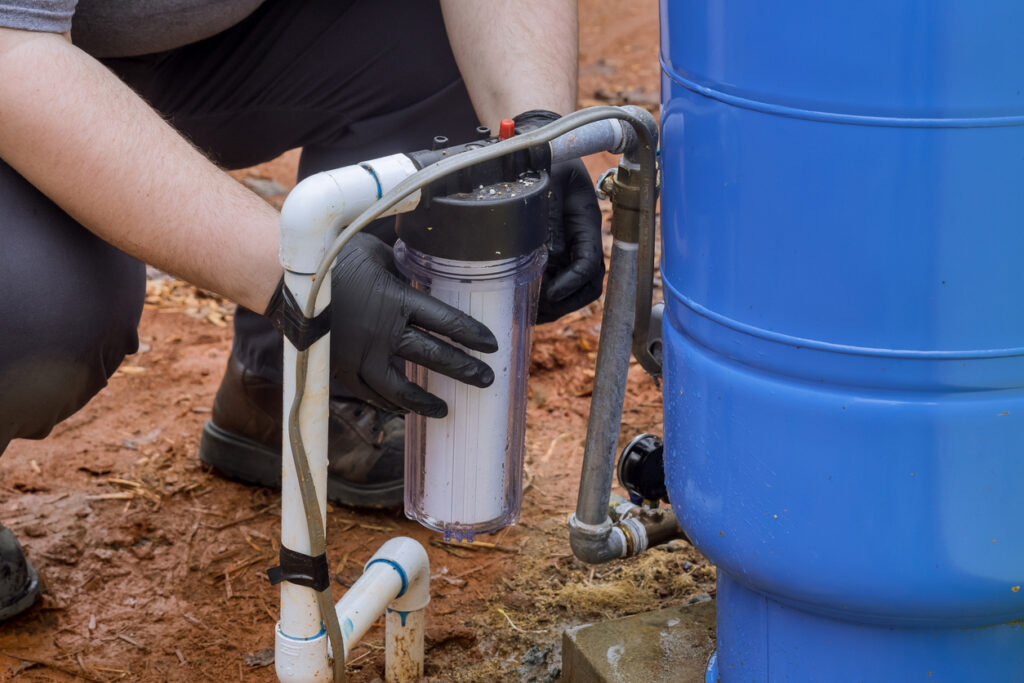
One common approach is oxidation followed by water filtration. Oxidation converts dissolved iron into solid particles. Once the iron is converted, a filtration system can capture those particles before the water is distributed throughout the house. Depending on the system and water conditions, treatment may use air injection or specialized filtration media to oxidize and remove iron.
While some systems can treat multiple issues like manganese or hydrogen sulfide, no single iron filter works for all wells. Effective treatment requires choosing a filtration solution tailored directly to your water test results.
Will a Water Softener Remove Iron?
Sometimes, but that doesn’t necessarily make a water softener the right solution for an iron problem. Certain water softeners can remove limited amounts of dissolved iron while treating hard water. But higher iron concentrations, oxidized iron and iron bacteria can require different treatment.
If you have both hardness and iron, the answer may involve more than one water treatment solution. The goal should be to build a system around your water rather than trying to make one piece of equipment solve every problem.
What If My Well Water Suddenly Turns Brown or Orange?
A sudden change deserves attention, particularly if your water normally runs clear. Sediment, disturbances in the well, corrosion, equipment problems, or changes in groundwater conditions can cause discoloration.
Let the water run briefly and see whether it clears, but don’t assume persistent discoloration is normal. If the problem continues, or you also notice changes in taste, odor, pressure, or sediment, have a professional inspect the water and well system. A sudden change in water quality is a good reason to find out what’s happening instead of waiting for it to disappear.
Get Rid of Rusty Well Water at the Source
Living with iron in your water can start to feel like a never-ending cleaning project. You scrub the sink, wash the shower and treat the laundry, only for the stains to come right back. The better approach is to find out what’s in the water and treat the problem before it reaches the rest of your home.
Aqua Pump Co. provides water testing and whole home water filtration solutions for homeowners throughout Connecticut and western Massachusetts. If testing confirms an iron problem, we can recommend an iron filtration system based on your water conditions and household needs. If your well water has turned red, orange or rusty, or you’re tired of fighting iron stains around the house, contact the Aqua Pump Company to have your water evaluated.