How Does a Well Pump Work?


How Does a Well Pump Work?
If your home relies on a private well, your well pump brings water from underground to your faucets, showers, appliances, and everything else that needs it. Most of the time, the process happens quietly in the background. You turn on the faucet and water comes out. But what is actually happening between your well and your kitchen sink?
Understanding how a well pump works makes it easier to spot problems with your water supply and know when your pump or another part of your well system needs attention. To help homeowners understand the process, the following addresses many of the most common questions about well pumps, including:
- How does a well pump work?
- What are the main parts of a well water system?
- What is the difference between a submersible and jet pump?
- How does a well pressure tank work?
- How long does a well pump last?
- What are the signs of a failing well pump?
- What should you do if your well pump stops working?
What Is a Well Pump?
A well pump is the mechanical component that moves groundwater from your well into your home’s water system. The pump doesn’t work alone. A typical residential well system also includes a pressure tank, pressure switch, check valve and piping. Depending on your home’s water quality, the system may also include water filtration and conditioning equipment to address minerals, contaminants, taste, odor and other water concerns.
How Does a Well Pump Work?
A well pump moves groundwater from the well toward your home. Exactly how it does that depends on the type of pump you have. Submersible pumps sit inside the well and push water toward the surface. Jet pumps are generally installed above ground and use suction to draw water from the well. The pump works together with a pressure tank and pressure switch to provide water when you need it.
When you turn on a faucet, take a shower or run an appliance, water leaves the pressure tank and the pressure inside the system begins to drop. Once it reaches a predetermined level, the pressure switch tells the well pump to turn on. The pump replenishes the water being used and restores pressure in the tank. Once the system reaches its upper pressure setting, the switch turns the pump off.
The cycle happens automatically throughout the day.
What Are the Main Parts of a Well Pump System?
Your well pump may do the heavy lifting, but several components work together to deliver water to your home.
- Well Pump: The pump moves water from the well into your home’s water system.
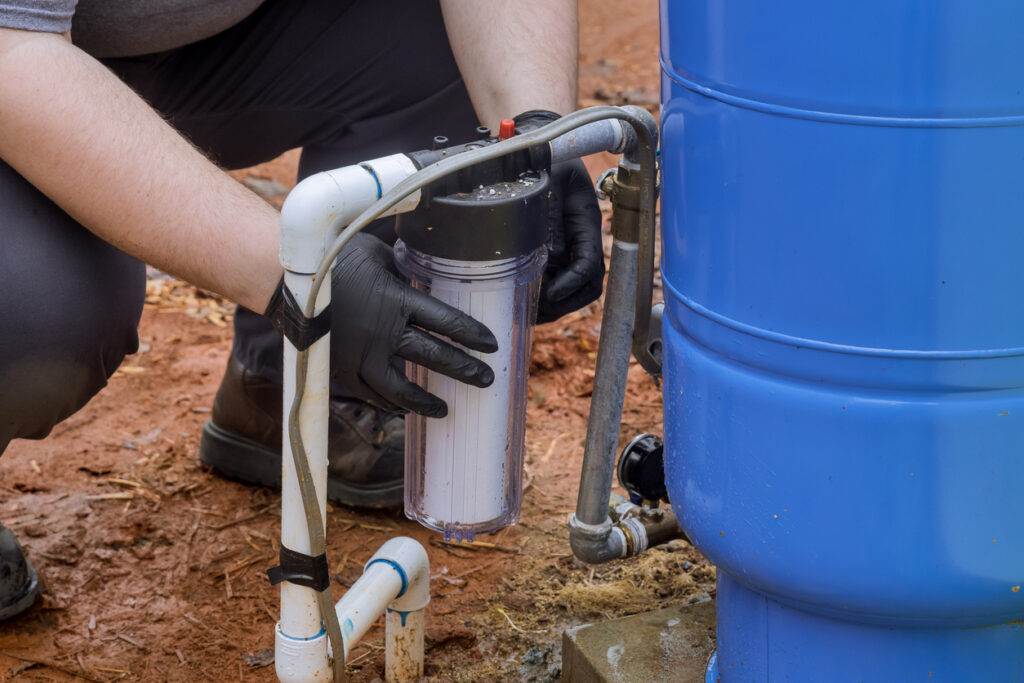
- Pressure Tank: A water pressure tank stores pressurized water so the pump doesn’t need to turn on every time you use a small amount of water.
- Pressure Switch: The pressure switch monitors water pressure and tells the pump when to turn on and off.
- Piping: Pipes carry water from the well to the pressure tank and throughout your home.
- Check Valve: Depending on the system, a check valve helps prevent water from flowing backward toward the well.
- Water Treatment Equipment: Some homes also use filtration, softening or other treatment equipment to address specific water quality concerns.
If one component isn’t working properly, you may notice changes in pressure, unusual pump cycling or even a complete loss of water.
What Are the Different Types of Well Pumps?
Two primary types of residential well pumps exist. These are submersible pumps and jet pumps.
Your well location, well depth, water level and household water requirements all help determine which type of pump is appropriate.
What Is a Submersible Well Pump?
A submersible pump is installed down inside the well and operates below the water level.
Instead of pulling water upward, the pump pushes water through the well piping and toward your home. Submersible pumps are commonly used for deeper wells and come in different sizes based on the well and the household’s water needs. Because the pump operates underwater, you generally won’t see or hear it working.
What Is a Jet Pump?
A jet pump is typically installed above ground and uses suction to draw water from the well.
Shallow well jet pumps are designed for shallower water sources. Deep well jet pumps use additional components within the well to draw water from greater depths. Jet pumps can be a good solution in the right application, but the correct choice depends on your well depth, water level and required flow.
The important thing isn’t simply choosing between a submersible or jet pump. It’s choosing a pump that is properly sized for your well and your home’s water needs.
If you’re replacing an existing pump, cost will also depend on factors such as pump type, well depth and the condition of the overall system.
How Does a Well Pump Work With a Pressure Tank?
The pressure tank is an important part of a traditional well system. Without it, your pump could have to turn on whenever you opened a faucet or flushed a toilet. Instead, the tank stores water under pressure and releases it when you need it.
As water leaves the tank, the pressure falls. When it reaches the pressure switch’s lower setting, the well pump turns on. The pump supplies water and restores pressure until the system reaches its upper setting. Then the pump shuts off and waits until it’s needed again.
This process reduces unnecessary pump cycling and helps provide more consistent water pressure throughout the home. Some systems also include larger water storage tanks. These can be helpful for wells with lower yields by allowing the well to replenish the stored water over a longer period.
Why Does My Well Pump Keep Turning On and Off?
A well pump that repeatedly starts and stops over short periods is known as short cycling. It shouldn’t be ignored.
Frequent cycling can be caused by a problem with the pressure tank, pressure switch or another part of the well system. It can also place unnecessary wear on the pump. If you hear your pump cycling frequently or notice your water pressure repeatedly rising and falling, schedule well pump repair and maintenance rather than waiting for the pump to fail.
How Long Does a Well Pump Last?
There isn’t a single lifespan for every well pump. Pump type, water quality, well conditions, household water usage and proper system sizing can all affect how long a pump lasts. Frequent cycling can also stress the pump motor and shorten its service life. Regular inspections and timely repairs can help you catch problems before they cause a water loss or premature pump replacement.
How Do I Know if My Well Pump Is Going Bad?
Well pump problems aren’t always as obvious as having no water at all. Some common warning signs include:
- Low or inconsistent water pressure
- Air or sputtering from faucets
- A pump that runs continuously
- Frequent pump cycling
- Unusual noises from the pump or pressure tank
- Increasing electrical usage
- Cloudy or sediment-filled water
- Changes in the smell or taste of your water
- No water coming into the home
These symptoms don’t automatically mean you need to replace the pump. Problems with the pressure tank, pressure switch, electrical components or the well itself can sometimes produce similar symptoms. Other problems can also indicate a more urgent issue and an emergency well water situation.
What Happens if My Well Pump Stops Working?
First, don’t assume the pump itself has failed. A loss of water can be caused by the pump, electrical supply, pressure switch, pressure tank or conditions inside the well. Severe weather and power disruptions can also affect well equipment.
Fortunately, homeowners can start troubleshooting the issue by checking whether the pump’s circuit breaker has tripped and whether the problem affects the entire home. Beyond basic troubleshooting, it’s generally best to have a well professional inspect the system. Repeatedly resetting equipment without identifying the cause can make an existing problem worse.
For problems that can’t wait, Aqua Pump Company also provides 24-hour emergency water service.
Can You Improve Water Pressure From a Well?
Yes, but the right solution depends on what’s causing the pressure problem. Traditional well systems operate within a pressure range, so some fluctuation is normal. Unusually low pressure, however, can indicate a problem with the pump, pressure tank, pressure switch, plumbing or water treatment equipment.
Homes that want more consistent pressure may also benefit from a Variable Frequency Drive system. A VFD adjusts pump operation as household water demand changes rather than simply running the pump at one fixed speed. This can help provide steadier pressure when multiple fixtures or appliances are using water at the same time.
How Important Is Well Pump Maintenance?
Routine maintenance helps protect more than the pump itself. In fact, professional well repair and maintenance can help identify worn equipment, pressure problems and other issues before they turn into larger repairs. Additionally, regular water testing is also important for homes that rely on private wells. Testing can identify water quality concerns that aren’t always visible through changes in taste, smell or appearance. Depending on the results, your home may benefit from a water filtration or conditioning system.
Choosing the Right Well Pump for Your Home
A well pump needs to match more than the depth of your well. Well depth, available water, required flow rate, household size and expected water demand can all influence pump selection. An oversized or undersized pump can reduce performance and cause unnecessary wear.
That’s why well pumps shouldn’t be treated as one-size-fits-all equipment.
Aqua Pump has more than 50 years of experience working with residential wells and water systems. We provide well pump installation, repair, replacement, inspection and testing and work with submersible pumps, shallow well pumps and deep well jet pumps.
If your water pressure has changed, your pump is cycling more frequently or you’ve suddenly lost water, contact the Aqua Pump Company. We’ll help identify the problem and recommend the appropriate repair or replacement.